
Large language models (LLMs) are increasingly used to assess international crises and inform policy decisions, yet little is known about whether they apply foreign-policy principles consistently across issue domains. We argue that LLMs exhibit “algorithmic organized hypocrisy”: a systematic decoupling between the norms they endorse in the abstract and the recommendations they provide when concrete security interests are at stake. The concept adapts Krasner’s conception of organized hypocrisy to computational systems that lack intentions but nonetheless reproduce conflicting normative and strategic logics. We test this argument using two instruments administered to fourteen frontier LLMs developed in the United States, China, and France. First, we measure models’ foreign-policy dispositions and the justifications underlying their choices using the sixteen-item battery developed by Kertzer et al. (2014). Second, we examine their responses to sixty Pew Research Center questions from 2024–2026 concerning ongoing international conflicts, recording both their policy positions and accompanying justifications. We find systematic evidence that (1) at the dispositional level, models converge on liberal international norms, including cooperative, multilateral, and accommodationist orientations, with little variation by national origin; and (2) at the situational level, cross-national convergence generally persists but weakens selectively when concrete disputes implicate politically salient strategic interests. This attenuation is clearest among Chinese-developed models on questions involving Taiwan and other Chinese red lines. These findings suggest that LLMs operate simultaneously as carriers of liberal norms and instruments of realpolitik, selectively qualifying their abstract normative commitments when concrete strategic interests become salient.
About the Speaker
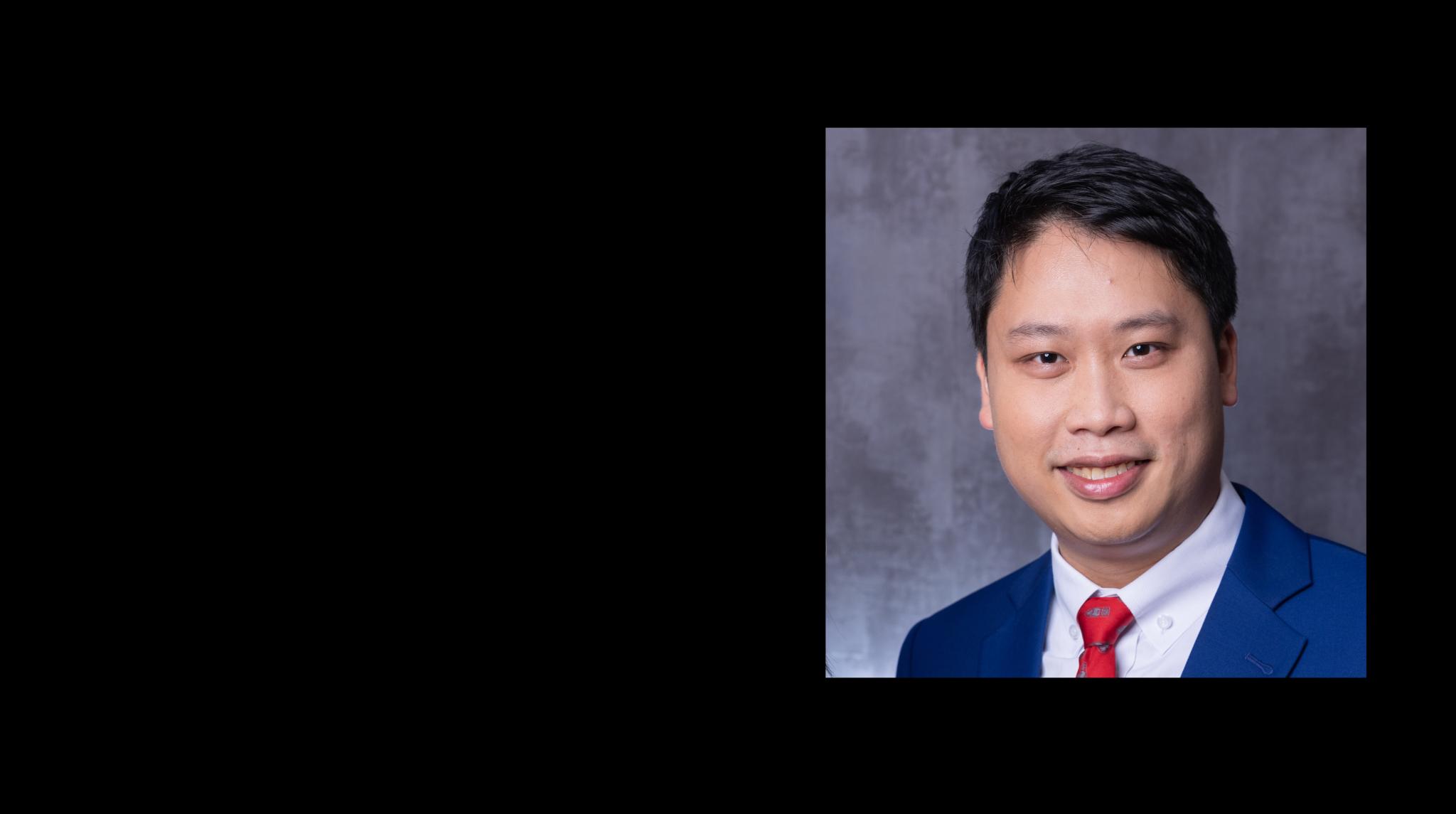
Jackie S.H. Wong is an Assistant Professor at the Department of International Studies at the American University of Sharjah in the UAE. In 2026–2027, he was an inaugural fellow in the AI Academic Upskilling Program for Social Scientists at the Oxford Martin AI Governance Initiative, University of Oxford, and a visiting fellow at the Australian Centre on China in the World at Australian National University. His research focuses on the intersection between computational social science and international security, with a regional focus on Asia. His book project explores the strategic relationship between China’s official rhetoric and crisis response.
His research has appeared in peer-reviewed journals including International Security, Political Science Research and Methods, and the Journal of Conflict Resolution. His policy pieces have also been published in Foreign Affairs and East Asia Forum.
Previously, he held fellowships at the Department of Politics at Princeton University, the Hans J. Morgenthau Fellowship at the University of Notre Dame, the Wang Gungwu Visiting Fellowship at ISEAS–Yusof Ishak Institute in Singapore, and predoctoral research fellowships at George Washington University’s Institute for Security and Conflict Studies and the USC Korean Studies Institute. He also received the Charles Koch Foundation Dissertation Fellowship and the Smith Richardson Foundation World Politics and Statecraft Fellowship.
He received his Ph.D. in Political Science and International Relations from the University of Southern California in 2024, his master’s degree in International Relations from the University of Chicago in 2016, and his undergraduate degree in Political Science, with University Distinction and Departmental Honors, from the University of Michigan–Ann Arbor in 2015.