
Discussing AI, Automated Systems, and the Future of War Seminar Series
Do the military and public support the use of emerging technologies, such as Artificial Intelligence (AI) and drones, during war? Drawing from operational experience and empirical research, Dr. Paul Lushenko examines this question through four concepts—trust, bias, dehumanization, and political control—that shape how capabilities are adopted by the military, understood by the public, and integrated into decision-making. He shows that support for emerging battlefield technologies is context dependent, varying according to how and why they are used. An AI “trust paradox” reveals that individuals often endorse AI-enabled systems despite limited trust, driven by perceived benefits and expectations of human oversight. Among servicemembers, trust is conditional, shaped by mission type, precision, and control. The research also complicates claims about bias, highlighting how perceptions of targets’ identities shape attitudes, while dehumanization can either heighten or erode support. As AI-enabled warfare expands, these findings underscore the enduring importance of human judgment for perceptions of the legitimate use of force.
Speaker
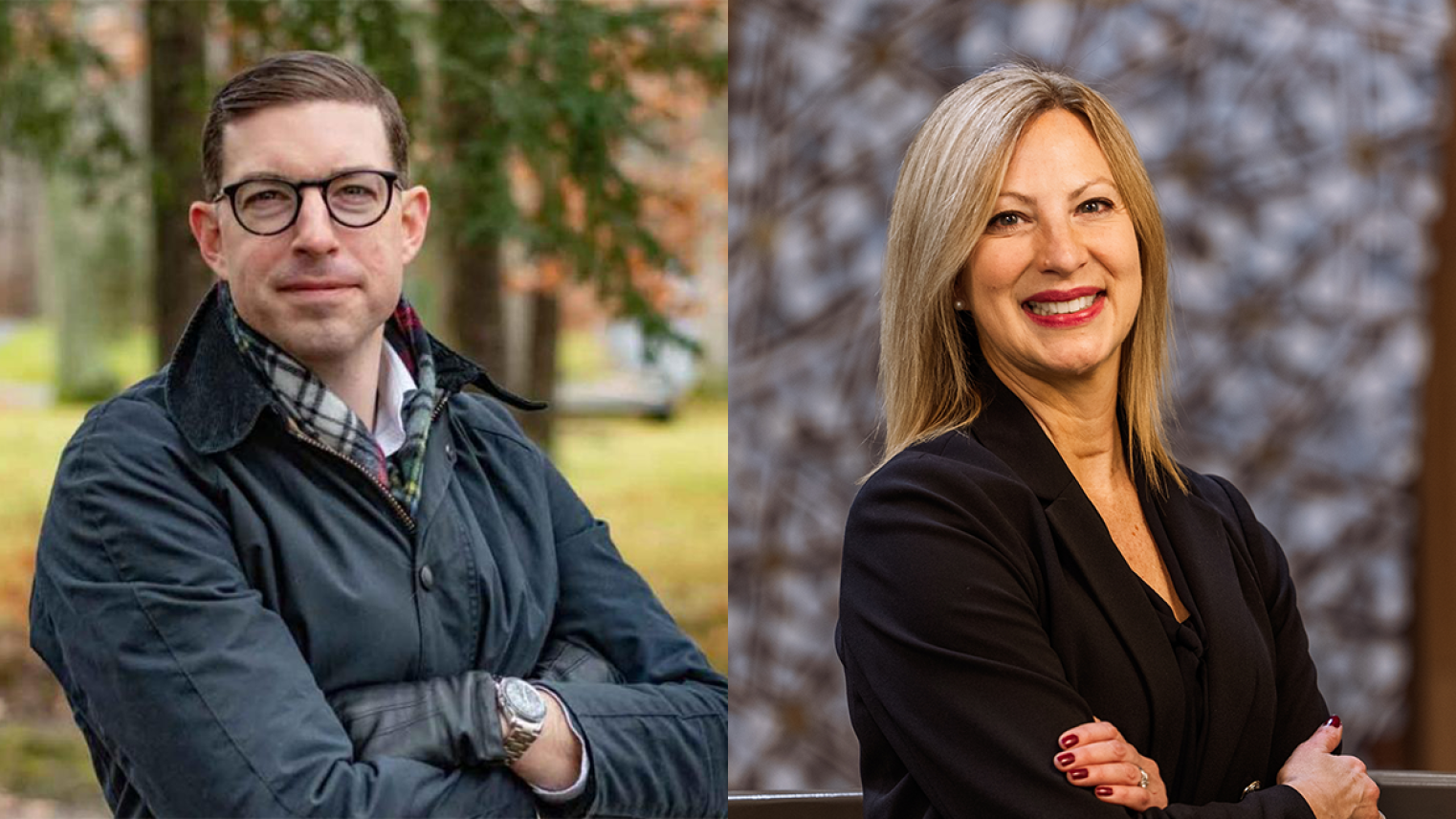
Paul Lushenko is a U.S. Army Lieutenant Colonel and an Assistant Professor at the U.S. Army War College. He is also a Professorial Lecturer at The George Washington University and Cornell University, Senior Fellow at Cornell University’s Tech Policy Institute and Institute of Politics and Global Affairs, and Non-Resident Expert at RegulatingAI. His work lies at the intersection of emerging technologies, politics, and national security, and he also researches the implications of great power competition for regional and global order-building. Paul is the author and editor of three books, including Drones and Global Order: Implications of Remote Warfare for International Society (2022), The Legitimacy of Drone Warfare: Evaluating Public Perceptions (2024), and Afghanistan and International Relations (2025). Paul has written extensively on emerging technologies and war, publishing in academic journals, policy journals, and media outlets such as Security Studies, Foreign Affairs, and The Washington Post. He earned his Ph.D. and M.A. in International Relations from Cornell University. He also holds an M.A. in Defense and Strategic Studies from the U.S. Naval War College, an M.A. in International Relations and a Master of Diplomacy from The Australian National University, and a B.S. from the U.S. Military Academy.
Chair
Toni Erskine is Professor of International Politics in the Coral Bell School of Asia Pacific Affairs at The Australian National University. She is recipient of the International Studies Association's 2024-25 Distinguished Scholar Award in International Ethics, Associate Fellow of the Leverhulme Centre for the Future of Intelligence at Cambridge University, and Chief Investigator of the 'Anticipating the Future of War: AI, Automated Systems, and Resort-to-Force Decision Making' Research Project, funded by the Australian Government through a grant by Defence.
This seminar series is part of a research project on Anticipating the Future of War: AI, Automated Systems, and Resort-to-Force Decision Making, generously funded by the Australian Department of Defence and led by Professor Toni Erskine from the Coral Bell School of Asia Pacific Affairs.
Additional information:
Registration is required for this event. If you require accessibility accommodations or a visitor Personal Emergency Evacuation Plan please email bell.marketing@anu.edu.au. Accessible parking spaces are available around campus should you require them.