Primary Landing Page

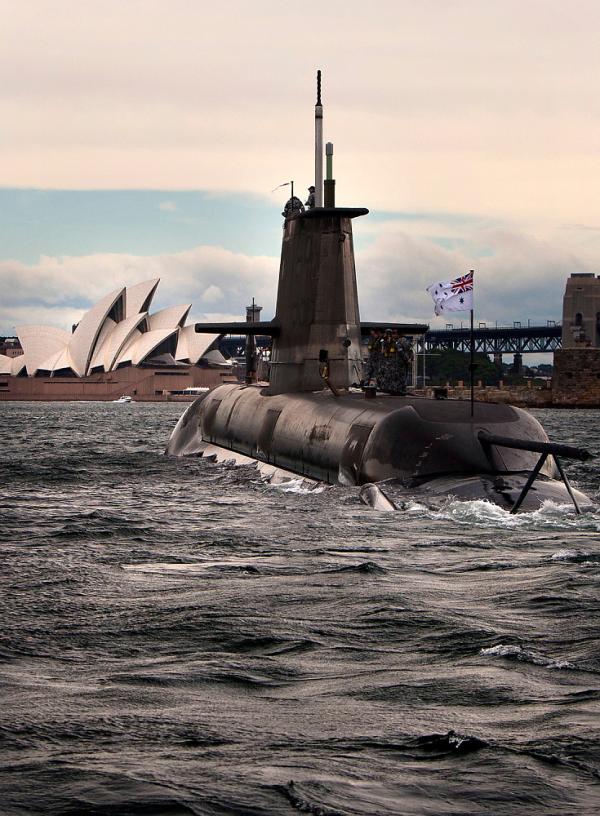
Established in 1966, the Strategic and Defence Studies Centre (SDSC) at the Australian National University is Australia's oldest and largest body of scholars dedicated to the analysis of the use of armed force in its political context. We provide Australia's defence and intelligence community, and those who aspire to join it, with insights to tackle the challenges of an ever-changing world.

Our mission

As a leading international research institution specialising in strategy and defence, the Strategic and Defence Studies Centre (SDSC) has a three-part mission:

  1. To provide ‘real world’-focused strategic studies that is research-based, research-led and world-class. Our primary expertise within the broad field of Strategic Studies consists of three related research clusters: Australian defence, military studies, and Asia-Pacific security. Our scholarship in these areas is intended to be recognised internationally and of value to the Australian policy community.
  2. To prepare and educate the next generation of strategic leaders – military, civilian and academic – in Australia, Asia and the Pacific region by providing world-class graduate and undergraduate programs in strategic and defence studies; and
  3. To contribute toward a better-informed standard of public debate in Australia, Asia and the Pacific region using high-quality outreach and commentary on issues pertaining to our core areas of expertise.

Our vision

The Strategic and Defence Studies Centre (SDSC) is proud to be acknowledged among the earliest generation of post-World War II research institutions dedicated to the analysis of armed force in its political context. In coming years, the Centre seeks to build upon our achievements, and to play a leading role in shaping international strategic studies, policies and debates. Within the next decade, SDSC aims to position itself as the leading university-based institution for research, education, and outreach in strategic and defence issues in the Asia-Pacific region.

In a period of major change in the global and regional strategic order, we will invest in the development of our research and teaching programs in order to play a leading role in defining Strategic Studies for our age. Our goal is to shape the areas of scholarship and policy-making which inform the leadership of the Asia-Pacific, and equip strategic planners and analysts to be bold and innovative in addressing the challenges of the future.

Research

sdsc-public-lecture-series.jpg
ABIS Sarah Williams

At the Strategic and Defence Studies Centre we understand strategic studies as the analysis of force in its political context.

Within strategic studies, the Centre’s core areas of expertise consist of three related research clusters:

  • Military studies
  • Australian defence
  • Asia-Pacific security

Education

SDSC is recognised as a centre of educational excellence where the next generation of strategic leaders and thinkers from Australia and the broader Asia-Pacific region is trained. We strive to produce graduates who are conceptually sophisticated, historically-informed, and who possess a practical and policy-oriented understanding of the used of armed force in its broader political context.

Our education programs, ranging from our flagship undergraduate Bachelor of International Security Studies to our postgraduate Graduate Certificate of Strategic Studies and Master of Strategic Studies, build the capacity to analyse and make integrating judgements about complex situations and chart courses of action amid high levels of ambiguity. Award-winning scholars contribute their research and expertise to teach into our world-class graduate and undergraduate programs.

bsrss

Head of Centre

Amy King

Amy King is Associate Professor and Head of the Strategic & Defence Studies Centre. She has published widely on China-Japan relations, the economics-security nexus in Asia, and the role of ideas in International Relations, and currently leads a team researching China's historical and contemporary role in shaping the international economic order.